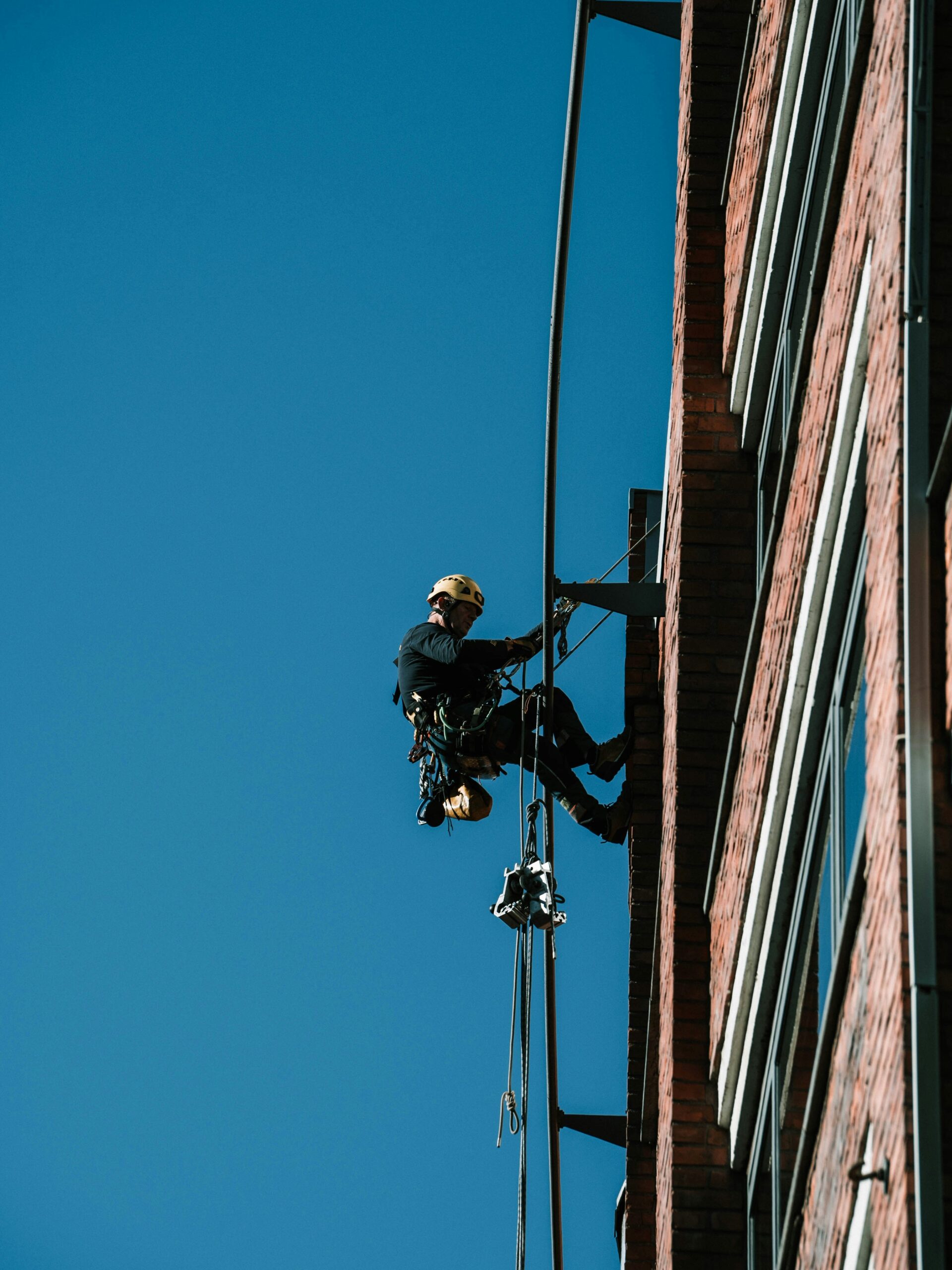

It starts like any normal morning. A maintenance worker sets up a ladder to fix a flickering light – something quick, routine, nothing to worry about. Then, in an instant, one small slip changes everything.
That’s how most accidents at height happen – quietly, during the kind of jobs we barely think about. It’s not always high scaffolds or rooftops; sometimes it’s just a few steps up, reaching or fixing something simple. But even a short fall can do serious harm.
The UK’s Health and Safety Executive (HSE) still lists falls from height as one of the leading causes of workplace injuries and deaths. Behind every number is a person, someone who thought it was just another ordinary day, with a family waiting for them to come home.

Why Small Mistakes Have Big Consequences
It’s easy to overlook how many everyday jobs involve working at height – from warehouse teams stacking shelves to engineers maintaining lighting rigs or cleaning building exteriors. But the risks are always there, waiting for that one rushed moment or overlooked detail.
Some of the most common causes of falls include:
- Using damaged or uninspected equipment
- Forgetting or misusing safety harnesses
- Slippery or cluttered surfaces
- Rushing through jobs without proper planning
The truth is, these accidents rarely happen because people don’t care. They happen because people are busy, under pressure, or assume “it’ll be fine.” That’s exactly where proper safety training can make all the difference.
Turning Safety into Second Nature
Training isn’t just about ticking a compliance box – it’s about building habits that keep people safe without them even thinking twice. Knowing how to properly use a harness, inspect a scaffold, or operate access machinery safely gives workers the confidence to do their jobs right every time.
That’s what North East Access Training focuses on: giving real-world skills that save lives. Their courses cover essential areas like IPAF (for powered access platforms) and PASMA (for scaffold tower safety), combining hands-on practice with clear, simple instruction.
When training is done right, it doesn’t feel like a lecture but it feels like common sense.
Building a Safer Workplace from the Ground Up
Workplace safety starts with culture, not rules. If managers set the example, teams will follow. It’s the everyday choices that matter most like wearing the harness even for “just a quick job,” checking the equipment even when it seems fine, and encouraging people to speak up if something looks unsafe.
Here are a few small but powerful ways employers can strengthen safety culture:
- Lead by example: When leadership prioritises safety, it becomes part of company DNA.
- Keep inspections routine: A quick daily check can catch a problem before it causes harm.
- Keep communication open: Workers should never feel afraid to report risks or mistakes.
- Refresh skills regularly: Safety standards and equipment evolve, so training should too.
Safety isn’t just about compliance. It’s about trust between employer and employee.
Following the Law and Protecting Lives
The Work at Height Regulations 2005 make it clear: all work done at height must be properly planned, supervised, and carried out by trained people. Yet, despite these clear rules, the HSE reports that around 35 people die each year in the UK from falls, and thousands more suffer serious injuries.
Those aren’t just numbers. They’re reminders that shortcuts cost far more than they save. A few extra minutes to check a harness or follow procedure can be the difference between a normal day and a tragedy.
Safety Is a Smart Investment
There’s a business case for safety, too. Companies that invest in training see fewer accidents, fewer absences, and stronger staff loyalty. When employees know their well-being matters, they work smarter and stay longer.
Providers like North East Access Training make that easy by offering accredited IPAF, PASMA, and harness safety courses. These are practical, flexible programs designed to fit real working conditions and not just classroom theory.
Final Thoughts
At the end of the day, work-at-height safety isn’t about checklists or certificates; it’s about people getting home safely. Every measure taken, every bit of training completed, and every safe habit formed adds up to that one simple outcome.
For employers, it’s not just a duty but a responsibility that defines a company’s values. Because when safety comes first, everything else tends to follow.